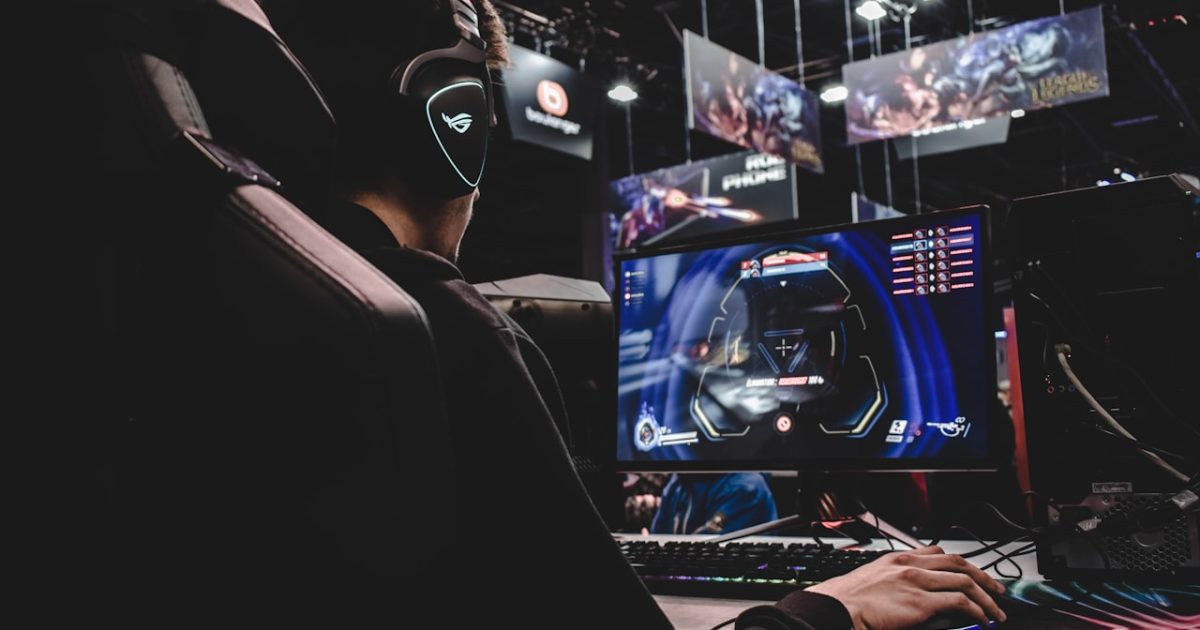
Artificial intelligence is no longer just a buzzword in gaming — it’s actively reshaping how games are designed, played, and experienced. From NPCs that actually hold intelligent conversations to procedurally generated worlds that feel handcrafted, AI is pushing the boundaries of what’s possible in interactive entertainment. And we’re only at the beginning. Here’s a deep dive into how AI is transforming video games in 2025 and beyond.
1. AI-Powered NPCs: The End of Scripted Dialogue Trees
Remember when talking to an NPC meant cycling through the same three dialogue options over and over? Those days are ending. Thanks to large language models (LLMs) integrated directly into game engines, NPCs in 2025 can hold dynamic, context-aware conversations that respond to what you actually say.
NVIDIA’s ACE (Avatar Cloud Engine) technology is already being used in select titles to give NPCs real-time speech recognition and generative responses. Imagine asking a blacksmith in an RPG about the local political situation and getting a nuanced, unique answer every single time. That’s where we’re headed — and some games are already there.
2. Procedural World Generation Gets Smarter
Procedural generation has been around since Rogue in 1980, but AI is supercharging it. Modern AI tools can generate not just random terrain, but meaningful environments — towns that feel lived-in, dungeons with logical layouts, ecosystems with believable wildlife behavior.
Games like No Man’s Sky pioneered this concept, but the next generation of AI-driven procedural worlds will make those feel primitive by comparison. Developers are now using diffusion models to generate textures, 3D assets, and even quest narratives on the fly, reducing development time while massively expanding content.
3. AI as a Game Master
One of the most exciting applications of AI in gaming is the concept of an AI Game Master — a system that dynamically adjusts the game’s difficulty, narrative, and world based on your playstyle and decisions.
We’re already seeing early versions of this in games like Left 4 Dead‘s AI Director, which adjusts enemy spawns based on player stress. But the next evolution goes much further: imagine an RPG where the entire story adapts to your character’s history, choices, and even emotional state, creating a truly personalized narrative experience.
4. AI-Assisted Game Development
It’s not just players benefiting from AI — developers are using it to build games faster than ever. Tools like GitHub Copilot, Scenario.gg (AI art for games), and proprietary internal AI tools are helping small studios punch above their weight class.
Indie developers in particular are leveraging AI to generate concept art, write initial dialogue scripts, compose adaptive soundtracks, and even QA test their games. What once required a team of 20 can now be accomplished by a team of 5 with the right AI tools. This is democratizing game development in a massive way.
5. The Controversy: Is AI Killing Creative Jobs?
It wouldn’t be a fair article without addressing the elephant in the room. AI in game development is deeply controversial. Writers, voice actors, concept artists, and animators have all raised serious concerns about AI being used to replace human creative labor.
The SAG-AFTRA strikes of recent years were partly fueled by these fears, and the gaming industry has seen its own labor disputes around AI usage. The debate is complex: AI can enable smaller teams to create bigger games, but it can also be used by large studios to cut headcount and reduce costs at the expense of human artists.
There’s no easy answer here, but the conversation is one the industry needs to keep having openly and honestly.
6. What’s Coming Next?
The next few years will likely bring:
- Fully voiced AI NPCs with unique personalities and memory of past interactions
- AI-generated game worlds that are genuinely infinite and always fresh
- Adaptive soundtracks that respond to gameplay in real time
- AI anti-cheat systems that are far more effective than current solutions
- Personalized difficulty systems that keep every player in the “flow state”
Tech to Maximize Your AI-Era Gaming Experience
AI-powered games are demanding more from hardware. Here’s what we recommend to stay ahead of the curve:
🧠 1. NVIDIA GeForce RTX 4070 or Higher (for AI-Accelerated Gaming)
NVIDIA’s RTX cards include dedicated Tensor Cores that power DLSS, ray tracing, and AI-driven features in games. If you want to experience the cutting edge of AI gaming, an RTX card is essential.
👉 Shop NVIDIA RTX 4070 on Amazon
💾 2. High-Speed NVMe SSD (For Faster AI Asset Streaming)
AI-generated worlds require fast storage to stream assets without stuttering. A Gen4 or Gen5 NVMe SSD is a must for modern gaming.
👉 Shop NVMe Gen4 SSDs on Amazon
🎧 3. Spatial Audio Headset (For AI-Driven Soundscapes)
AI-generated adaptive soundtracks and 3D audio environments sound incredible with a proper spatial audio headset. The SteelSeries Arctis Nova Pro and Sony INZONE H9 are both excellent choices.
👉 Shop Spatial Audio Gaming Headsets on Amazon
Final Thoughts
AI in gaming is one of the most exciting — and contentious — developments in the industry’s history. The potential for richer, more dynamic, more personalized game worlds is genuinely thrilling. But it must be pursued responsibly, with respect for the human creators who make gaming the art form it is. One thing’s for certain: the games of 2030 are going to look nothing like what we play today.
What do you think about AI in gaming? Exciting future or cause for concern? Let us know in the comments!
Disclosure: This article contains Amazon affiliate links. As an Amazon Associate, The Gamer Couch Podcast earns from qualifying purchases at no extra cost to you.


Leave a Reply
You must be logged in to post a comment.